


Private companies are dealing with the same increased number of risks that are challenging public companies — only they are often doing so with less resources at their disposal. How do you think a board can best help its company deal with our current landscape of macroeconomic uncertainty?
JUMP TO THE OTHER SIDE OF THE INCOME STATEMENT
Is the board stuck on the expense side of the income statement — costs, risks, tariffs, technology, cybersecurity and supply chain?
They are important, yes. Yet nothing alleviates concerns about macroeconomic uncertainty more than a repeated blast of sales or fee revenue hitting your top line.
More customers, more often, paying more — that’s the cure.
Ask “What does your company offer — or what could they offer — that people will pay ridiculous money for?” For an insurance company that struggled to sell accident insurance, it turned out to be telehealth sports psychology coaching for kids to get the competitive edge (with accident insurance included). Patented. No competition.
As directors, we don’t build products — but we do guide strategy. It’s our job to ensure the CEO has a mandate, a team and resources to pursue breakthroughs and, yes, ridiculously profitable revenue opportunities.
Private equity gets this, through economic highs and lows. Initially, they strip out costs and risks, but to exit and cash-in they bounce to the other side of the income statement for “value creation”. That’s when people pay them ridiculous amounts of money to invest. Wash, rinse and repeat.
What are your fellow directors’ core skills? Are your committees centering on audit, governance and compensation? Where do you prioritize value creation, revenue generation and product development? The National Association of Corporate Directors reported fewer than 12% of Fortune 500 boards have committees for the latter, and almost all of them outperformed the Nasdaq composite, S&P 500 and New York Stock Exchange composite.

Prospects don’t pay for words like AI, tech, digital transformation, SaaS or strategy, but rather what those words do, which they can’t live without. Let’s help our CEOs shift focus from words and expenses to the “income” part of the income statement for best-in-the-world products (not more features), value creators, and ridiculous, customer-centric revenue growth.
Babs Ryan is an independent director of a middle-market family marketing technology company, advisory board member of Aviva Labs, strategic advisor of Kintera AI and CEO of Sparks Worldwide.
INCREASE ENGAGEMENT WITH MANAGEMENT
The corporate environment has always been uncertain, but recent geopolitical events have challenged directors’ assumptions about political and economic normality in ways many of us have not seen in the United States in our lifetimes. Tariffs are upending global supply chains; inflation is causing pricing uncertainty and exchange rates are becoming more volatile. These are just a few of the macroeconomic challenges management must navigate in the current environment. As experienced and accomplished leaders bringing external perspective, boards can and should serve as essential advisors to management during times of uncertainty.
Boards should work with the management team to outline and understand the company’s risk appetite and risk culture. Management may shy away from taking risks in the face of uncertainty, but this is likely to negatively affect strategy execution. It is the board’s responsibility to make sure management takes an appropriate amount of risk, given the circumstances, to achieve the company’s short- and long-term strategic goals. In addition, as a part of its responsibility for risk oversight, the board should ensure management has built a risk governance model that ensures responsibility and accountability for risk at the executive level.
With the risk appetite outlined, the board should work with management to scenario-plan mitigation strategies for uncertainties and the risks that might arise from them. Although the board and management should use their collective intellectual and experiential muscle to create realistic possible outcomes and identify ways to navigate future challenges, AI can help to identify some pitfalls the board and management may miss and some strategies that may not be obvious at first glance.
Lastly, boards should remind management to stay true to the company’s values, especially during periods of uncertainty. Values should serve as a guiding light for the company as it navigates different risks and uncertainties. Staying true to company values also reinforces the organization’s identity in ways employees and stakeholders will remember and appreciate after these turbulent times have passed.
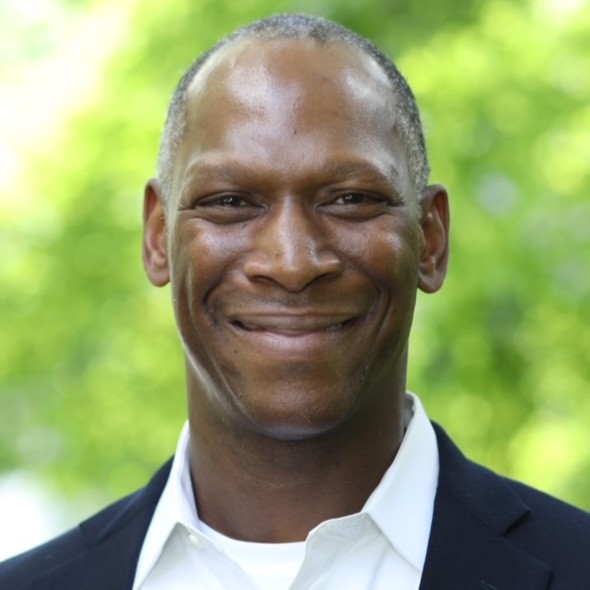
Marc Sullivan is director and chair of the audit and finance committee of Carbice.
STEER VALUE IN UNCERTAIN TIMES
The global economic landscape presents multifaceted challenges, demanding heightened vigilance and strategic foresight from boards. Geopolitical risks, economic volatility and rapid technological advancement are frequent board agenda items. Boards face a strategic inflection point. Traditional oversight is insufficient. Organizational success hinges on the board’s capacity to anticipate changes, cultivate scenario-based response and act deliberately to foster resilience and shape future trajectory. This paradigm shift underscores the board’s critical role in proactive governance.
Leading with intent in an uncertain world. In macroeconomic uncertainty, effective board leadership transcends traditional oversight. A proactive governance model empowers boards to strategically shape trajectory, transforming challenges into opportunities and ensuring enduring value. This fosters dynamic partnership, driving resilience and growth.
Proactive risk anticipation and strategic dialogue. Boards must transition to proactive risk anticipation via continuous engagement and mid-cycle briefings. This involves rigorously challenging management’s scenario planning, demanding tailored scenarios impacting capital strategy and long-term value as well as defining clear triggers and actions. Active participation in strategic foresight is crucial for understanding risks and opportunities.
Transparent communication with stakeholders. In heightened uncertainty, transparent communication from the board and management is paramount. This includes enhanced, forward-looking reporting with in-depth outlooks and scenario-based risk indicators. Boards must ensure clear, consistent communication of organizational vision, connecting long-term ambitions with short-term responsiveness to inspire confidence and unify teams. Transparency builds trust and aligns stakeholder interests.
Agile decision-making processes. Our current landscape demands inherent agility, characterized by rapid technological disruption. Boards must foster rapid adaptation, moving from rigid planning. This includes agility in the board-CEO relationship and adaptable committee structures for critical issues. Board composition should be agile, balancing institutional knowledge with new skills like AI expertise. The board’s internal operating model must mirror expected dynamism.
Supportive oversight for management. While CEO scrutiny has increased, it is essential that mutual trust between board and CEO remains strong. Boards provide support as a “critical friend” by fostering robust dialogue, questioning management’s capability development and deepening commitment to ongoing learning. Effective boards combine rigorous challenge with a supportive partnership, empowering management to navigate challenges.
By embracing a proactive, transparent, agile and supportive governance framework, boards can transcend macroeconomic uncertainty. This intentional leadership safeguards the organization, positions it to seize opportunities, fosters innovation and creates sustainable value. As “resilience architects,” boards guide their organizations to emerge stronger and better equipped for sustained growth.
Lucie Claire Vincent is an independent director of Toluna.